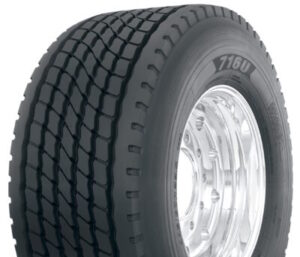
How Long Do Performance Tires Last, and How Do I Balance Grip With Longevity?
The question of how long performance tires last does not have a single answer — it depends directly on the compound hardness, which is the fundamental trade-off in tire engineering. Softer rubber grips the road more effectively but wears faster under heat and friction. Harder rubber resists wear but sacrifices traction, particularly in wet conditions and at lower temperatures. This trade-off is formally quantified in the UTQG treadwear rating explained on every tire sidewall sold in the United States: a tire rated 400 will theoretically outlast a tire rated 200 by a factor of two under standardized test conditions.
In practical terms: ultra-high-performance summer tires designed for maximum dry grip typically carry treadwear ratings of 200–300 and may need replacement after 25,000–35,000 kilometers under normal driving. Touring and all-season tires rated 500–800 can last 60,000–80,000 kilometers with proper maintenance. For drivers researching the best tires for high mileage, the smarter calculation is total cost of ownership rather than purchase price: divide the tire price by its expected lifespan in kilometers to find the real cost per kilometer.
Maintenance habits have an equally large impact on lifespan as compound choice. Tires that are consistently underinflated wear faster on the outer edges. Tires that are never rotated wear unevenly across the axles. A tire rotation every 8,000–10,000 kilometers and monthly pressure checks extend lifespan measurably regardless of which compound you choose.


 06Mar
06Mar