



Selecting the correct Off-The-Road (OTR) tire tread pattern is one of the most important factors affecting tire life, machine productivity, and operating costs. Different terrains place different demands on the tire. While muddy conditions require maximum traction and self-cleaning capability, rocky environments demand superior cut resistance and carcass protection.
| Working Condition | Recommended Tire Type | Tread Depth | Main Advantage |
|---|---|---|---|
| Mud, Clay, Soft Ground | E-2, G-2, E-3 | Standard (100%) | Excellent traction and self-cleaning |
| Quarry, Gravel, Sharp Rock | E-4, L-4 | Deep Tread (150%) | Enhanced cut and puncture resistance |
| Underground Mining, Severe Rock | L-5, L-5S | Extra Deep Tread (250%) | Maximum protection and wear life |
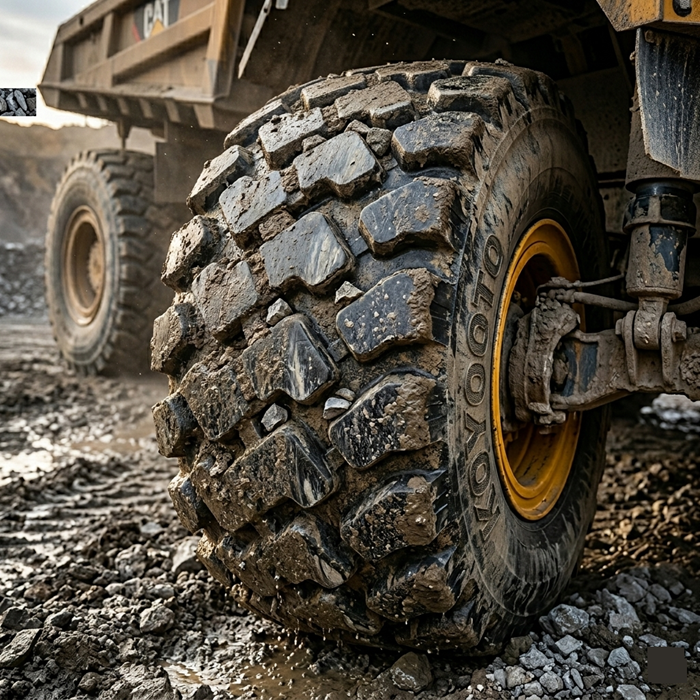
When operating on muddy construction sites, earthmoving projects, or soft mining surfaces, traction becomes the primary concern.
Traction-pattern tires such as E-2, G-2, and E-3 are designed with:
As the tire rotates, mud is expelled from the grooves, maintaining ground contact and minimizing wheel slip. This design improves machine mobility, fuel efficiency, and productivity in wet conditions.
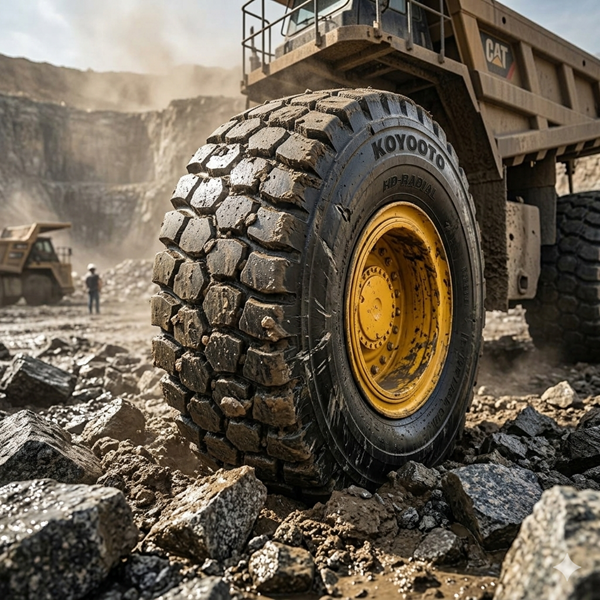
Rocky environments expose tires to severe cuts, punctures, and impact damage. In these applications, tire protection is more important than maximum traction.
Rock-pattern tires such as E-4, L-4, and L-5 feature:
The deeper tread design distributes load more evenly and shields the casing from sharp rocks, extending tire service life while reducing downtime.
| Tire Type | Relative Tread Depth |
|---|---|
| E-3 | 100% (Standard) |
| E-4 / L-4 | 150% of E-3 |
| L-5 / L-5S | 250% of E-3 |
The deeper the tread, the greater the protection against wear, cuts, and impacts. However, deeper tread tires generally generate more heat and are best suited for lower-speed operations.
Choosing the correct OTR tread pattern can significantly improve tire performance and reduce operating costs:
By matching tire design to actual working conditions, operators can maximize traction, extend tire life, and achieve a lower cost per operating hour.
OTR tire pattern, OTR tire tread design, E3 tire, E4 tire, L5 tire, mining tire tread, quarry tire, loader tire pattern, earthmover tire, off the road tire, OTR tire selection, rock pattern tire, traction pattern tire, deep tread OTR tire, mining OTR tires.
